


Introduction: A Town Between Forest and City
Clamart lies in the south-west of Paris, about 8–9 km from the centre, and is known for its balance of urban life and extensive green spaces. The commune borders the Meudon Forest and contains several parks, while maintaining fast access to central Paris via the Transilien Line N and the T6 tramway.
This article presents the verified historical stages that shaped modern Clamart.
From Rural Origins to Early Villages
Until the 19th century, Clamart was predominantly a rural settlement. The original village formed around today’s Bas-Clamart, where agriculture, woodland crafts and local trades shaped everyday life.
Viticulture existed in Clamart, as in many areas of the Paris Basin, until its decline in the 19th century. A symbolic vineyard has since been replanted by a local association to preserve this heritage.
Neighbourhood names such as Trivaux, La Plaine and Petit Clamart reflect former outlying localities that gradually integrated into the town.
19th Century: The Railway and Urban Growth
A key milestone in Clamart’s development was the opening of the railway between Paris-Montparnasse and Versailles, with a station at Clamart. This improved connectivity encouraged population growth and transformed the town into a residential destination for commuters.
The town expanded around existing hamlets, but remained more residential than industrial, with gradual urban development rather than large-scale factories.
Early–Mid 20th Century: A Residential Suburb Emerges
Throughout the 20th century, Clamart strengthened its role as a residential town within the Paris metropolitan area. The municipality invested progressively in:
-
schools and educational facilities
-
sports complexes
-
cultural centres and libraries
-
neighbourhood parks and gardens
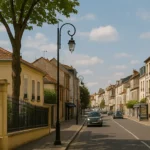
The Jardin Parisien district, developed in the interwar and post-war periods, became known for its suburban identity and pavilion-style housing.
Major green spaces around the town include the Meudon Forest and centrally located parks such as Parc Henri-Barbusse.
Post-War to Late 20th Century: Modernisation and Services
After World War II, Clamart expanded its housing stock and public services. Improved transport links, roads and bus routes strengthened its position within a growing suburban region connected to major employment hubs such as Issy-les-Moulineaux, Meudon and Vélizy-Villacoublay.
One significant historical event is the 1961 quarry collapse in Clamart, in which 21 people died — a reminder of the area’s geological past.
Urban policy in the late 20th century focused on enhancing public spaces, improving parks and reinforcing the town centre.
21st Century: Greater Paris, Tramway T6 and New Districts
Improved Mobility
Since 2014, the T6 tramway has connected Clamart with:
-
Châtillon–Montrouge (Métro line 13)
-
Vélizy-Villacoublay and the Vélizy 2 shopping centre
-
Viroflay (connections to RER C and Transilien lines)
Combined with the Transilien Line N to Paris-Montparnasse, Clamart has become a well-linked suburban hub.
New Urban Projects
One of the most important recent developments is the Panorama district on the plateau. It includes new housing, shops, public spaces and improved soft-mobility routes, consistent with Greater Paris urban planning goals.
Neighbourhoods of Clamart
Clamart is composed of several recognised districts:
-
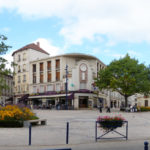
Centre-Ville / Bas-Clamart – historic centre with shops and civic buildings
-
Petit Clamart – a major crossroads with 20th-century development
-
Trivaux / La Plaine – largely residential districts
-
Jardin Parisien – known for pavilion houses and its suburban character
-
Panorama – a newly built neighbourhood on the plateau
Nature, Culture and Local Life
Green Spaces
-
Meudon Forest (walking trails, lakes and viewpoints)
-
Parc Henri-Barbusse (central lawns and playgrounds)
-
Several neighbourhood parks and gardens
Culture
Clamart offers several cultural venues, including the town’s library (Médiathèque François-Mitterrand) and facilities hosting exhibitions, concerts and community events.
Daily Life
Weekly markets, a variety of cafés and bakeries, and frequent local events contribute to Clamart’s calm but lively atmosphere.
A Practical Base Near Paris
With quiet residential streets, generous green areas and excellent transport links, Clamart is an ideal location for:
-
visitors seeking proximity to Paris without staying in the city centre
-
travellers looking to combine museum visits with forest walks
-
business travellers working in southern Paris
Conclusion: A Town Shaped by Landscape and Connectivity
Clamart’s evolution — from rural village to suburban town integrated within Greater Paris — reflects the importance of both its natural surroundings and its transport links. Its neighbourhoods, parks and modern projects make it a balanced and appealing place for visitors and residents alike.